Organic vs ad-generated
How TrueRoyalties splits your sales between the ones your ads brought in and the ones that came on their own — where the numbers come from, and their limits.
The split
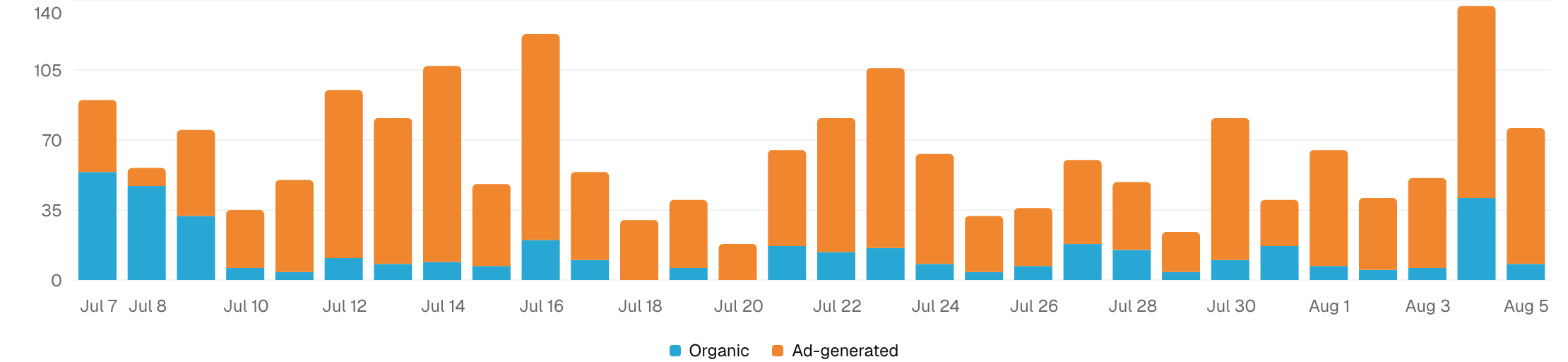
Total units = Ad-generated + OrganicAd-generated is what Amazon attributes to your ads: someone clicked an ad and bought within Amazon's attribution window (14 days for books).
Organic is everything else — what your catalog sold without you paying for the click.
Why it matters
Organic sales are the honest measure of whether your book has traction. A title that is 100 % ad-generated stops selling the day you stop paying. A title with a healthy organic share has built its own momentum.
The same split is available for Kindle Unlimited pages, on the KENP page.
Where the numbers come from
- Total comes from your sales reports — KDP and every other platform you connect. It is the ground truth of what sold.
- Ad-generated comes from Amazon Ads, and from nowhere else.
- Organic is the subtraction, never a separate report.
Three honest limitations
Only Amazon Ads can make a sale "ad-generated". Meta and TikTok do not know which Amazon sale came from which ad, and your sales on Kobo, Apple Books or your own store carry no attribution at all — so all of them land in organic. Amazon Attribution measures what your ads outside Amazon brought in, on its own page, without changing this split.
Attribution is Amazon's model, not a fact. Amazon decides what counts as ad-driven. A reader who clicks an ad, thinks it over for three weeks and then buys is counted as organic.
Ads also lift organic sales. Advertising improves rank, and better rank sells copies that are recorded as organic. So the ad-generated share is a floor of what your ads did, not a ceiling.
Timing
Amazon reports a print sale when it ships, not when it is ordered. So ad-attributed print orders can appear a day or two after the click. The Orders page tells you how many are still pending shipping.